Skip to main content
Contents Dark Mode Prev Up Next \(\newcommand{\R}{\mathbb R}
\newcommand{\reference}[1]{\overline{#1}}
\newcommand{\lt}{<}
\newcommand{\gt}{>}
\newcommand{\amp}{&}
\definecolor{fillinmathshade}{gray}{0.9}
\newcommand{\fillinmath}[1]{\mathchoice{\colorbox{fillinmathshade}{$\displaystyle \phantom{\,#1\,}$}}{\colorbox{fillinmathshade}{$\textstyle \phantom{\,#1\,}$}}{\colorbox{fillinmathshade}{$\scriptstyle \phantom{\,#1\,}$}}{\colorbox{fillinmathshade}{$\scriptscriptstyle\phantom{\,#1\,}$}}}
\)
Exercises 7.11 Exercises: Functions
1. What is a Function?
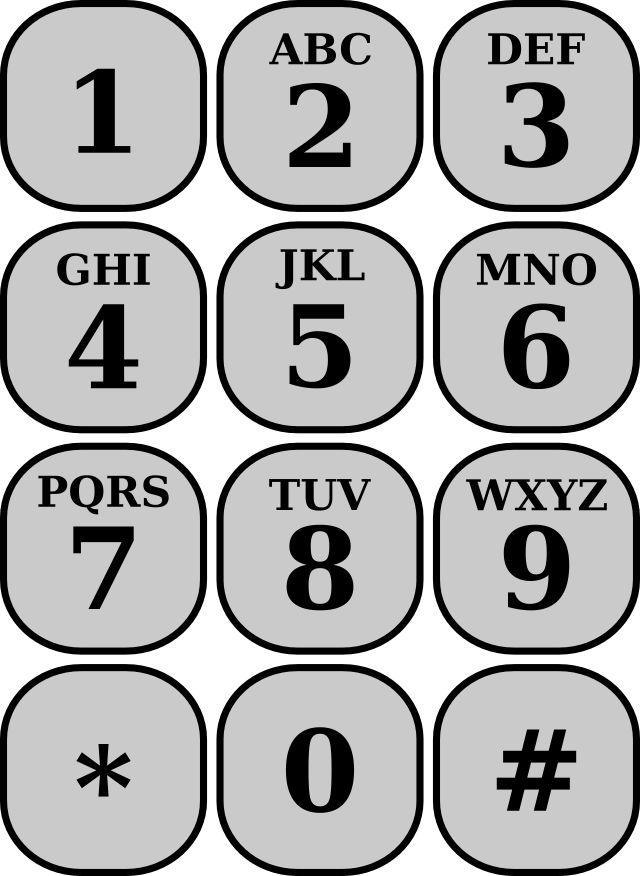
There is the set of buttons
\begin{equation*}
\{1,2,3,4,5,6,7,8,9,0,*,\#\}
\end{equation*}
and the set of letters
\begin{equation*}
\{A,B,C,D,E,\ldots,W,X,Y,Z\}.
\end{equation*}
The association between the two determines a function. What are the inputs to this function? the buttons or the letters? What are the outputs? What is the domain of this function? What is the range?
2.
Let \(f(x) = \sqrt{2-x}\text{.}\)
Evaluate
\(f\) at
\(x=7\text{,}\) if possible.
Evaluate
\(f\) at
\(x=-7\text{,}\) if possible.
What is the domain of
\(f\text{?}\)
When is
\(f(x) = 0\text{?}\)
3. Evaluating Functions.
Suppose that
\(f(x) = \sqrt{16+x^2}\) and
\(g(x) = x^3+2x\text{.}\) Evaluate the expression completely. Show your work carefully as a sequence of equal expressions seperated with the equal sign.
\begin{equation*}
\frac{f(-3)\cdot g(-1)}{2+\left[f(-3)\right]^2+g(-1^2)}.
\end{equation*}
Answer .
\begin{equation*}
\frac{f(-3)\cdot g(-1)}{2+\left[f(-3)\right]^2+g(-1^2)} = -5/8
\end{equation*}
4. Given the defintions of
\(f(x) = 1-2x^2\text{,}\) \(g(x) = \sqrt{2+x}\text{.}\) Find each expression and determine the domain. Then simplify the result, if possible.
\(\displaystyle \displaystyle f-h\)
\(\displaystyle \displaystyle fh\)
\(\displaystyle \displaystyle f/h\)
\(\displaystyle \displaystyle f \circ g \)
\(\displaystyle \displaystyle g \circ f \)
\(\displaystyle \displaystyle f \circ f\)
\(\displaystyle \displaystyle h\circ k\)
\(\displaystyle \displaystyle k\circ h\)
\(\displaystyle \displaystyle g\circ k\)
5.
Let \(F(x) = 1/x\) and \(G(x) = \frac{1-x}{2x+3}\) Find each expression and determine the domain. Then simplify the result, if possible.
\(\displaystyle (F\circ G)(x)\)
\(\displaystyle (G\circ F)(x)\)
\(\displaystyle (G\circ G)(x)\)
\(\displaystyle (G\circ F)(x)+2\)
\(\displaystyle (G\circ F)(x+2)\)
Inverse Functions.
6. Suppose
\(f\) is a one-to-one function satisfying
\(f(0) = -1\text{,}\) \(f(1) = −1\text{,}\) and
\(f(−1) = 0\text{.}\) Evaluate each expression below.
\(\displaystyle f^{-1}(1)\)
\(\displaystyle f^{-1}(0)\)
\(\displaystyle -f(1)\)
\(\displaystyle [f(0)]^{-1}\)
\(\displaystyle (f^{-1}\circ f)(0)\)
7. Given that each function is one-to-one, find its inverse function.
\(\displaystyle f(x) = 4-3x\)
\(\displaystyle g(x) = (4-3x)^3\)
\(\displaystyle h(x) = \frac{1}{4-3x}\)
\(\displaystyle h(x) = \frac{2x+1}{4-3x}\)
\(\displaystyle k(x) = \frac{1}{\sqrt[5]{4-3x}}\)
8. Explain why
\(f(x) = \frac{1}{(2-x)^4}\) is not one-to-one.
9. Difference Quotients.
Find and simplify the difference quotient
(7.10.2) for each function.
\(\displaystyle f(x) = 4-2x\)
\(\displaystyle f(x) = (4-2x)^2\)
\(\displaystyle f(x) = \frac{1}{4-2x}\)